
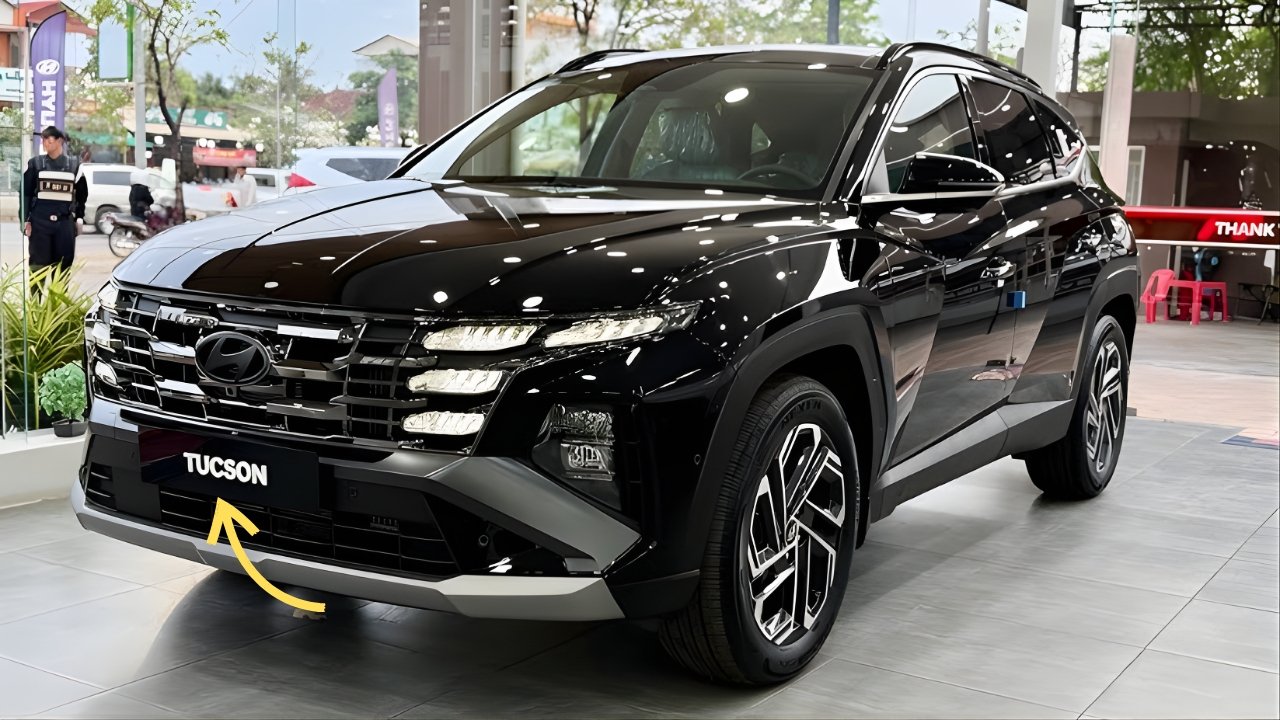
The new Hyundai Tucson 2026 is preparing for a major upgrade, bringing updated styling, improved safety features, and modern hybrid powertrains to the midsize SUV segment. As one of Hyundai’s flagship SUVs, the next-generation Tucson is expected to deliver a more premium design, stronger technology integration, and better fuel efficiency for modern drivers.
Early previews and industry reports indicate that the upcoming Tucson will focus heavily on hybrid and plug-in hybrid systems while offering improved driver assistance features. With its bold design and advanced infotainment technology, the new Tucson aims to compete strongly against premium SUVs in its class.
For families and long-distance travelers looking for a refined crossover, the 2026 Tucson is shaping up to be one of Hyundai’s most advanced SUVs yet.
Bold Exterior Design With Modern SUV Styling
The 2026 Hyundai Tucson continues Hyundai’s distinctive Parametric Dynamics design philosophy, but with sharper lines and a more modern appearance.
The front fascia features redesigned Parametric Hidden Lights integrated into a wider grille, giving the SUV a futuristic look while maintaining its recognizable identity.
A slightly lower and wider stance enhances road presence, while 18-inch alloy wheels add a premium touch to the overall design.
At the rear, minimalist LED lighting elements and a clean tailgate design emphasize the SUV’s modern aesthetic. Subtle skid-plate-style accents and wheel-arch cladding reinforce the vehicle’s rugged SUV character.
Premium Cabin With Next-Generation Infotainment
Inside the cabin, the new Tucson introduces a redesigned cockpit that focuses on simplicity and connectivity.
The dashboard is centered around a large 16:9-format touchscreen display running Hyundai’s new Pleos operating system, offering faster response times and a smoother interface.
Additional interior highlights include:
- Wireless Apple CarPlay and Android Auto
- Over-the-air software updates
- Ambient lighting for enhanced cabin atmosphere
- Premium audio system for improved sound quality
The interior layout separates driver and passenger zones, creating a dual-cockpit environment designed to improve comfort and usability.
AI-Powered Smart Technology
Hyundai is introducing an AI-based voice assistant called Gleo, designed to make interaction with the vehicle more intuitive.
This system allows drivers to control navigation, media playback, climate settings, and phone functions through natural voice commands.
Gleo also learns user preferences over time, improving responsiveness and adapting to different speaking styles.
Combined with advanced connectivity features, the Tucson’s interior aims to feel more like a digital lounge than a traditional car cabin.
Hybrid and Plug-In Hybrid Powertrains
Hybrid Power for Efficiency
The 2026 Tucson is expected to focus heavily on hybrid technology.
The hybrid setup pairs a petrol engine with an electric motor, providing improved fuel efficiency and smooth performance for daily driving.
Fuel economy for the hybrid version is expected to reach around 18 km/l, depending on driving conditions.
Plug-In Hybrid Capability
Hyundai is also expected to offer a plug-in hybrid variant capable of delivering an electric-only driving range of approximately 100 kilometers.
This configuration allows drivers to complete many daily commutes using electric power alone while maintaining the flexibility of a petrol engine for longer journeys.
Automatic transmissions and optional all-wheel-drive systems will likely be available in higher trims.
Advanced Safety and Driver Assistance Systems
Safety remains a key priority for Hyundai, and the Tucson will include the latest Hyundai SmartSense driver assistance technologies.
| Safety Feature | Function |
|---|---|
| Adaptive Cruise Control | Maintains safe distance from vehicles ahead |
| Lane Centering Assist | Helps keep the SUV centered in its lane |
| Blind Spot Monitoring | Detects vehicles in adjacent lanes |
| Rear Cross Traffic Alert | Warns drivers of approaching traffic while reversing |
| Driver Attention Monitoring | Alerts drivers if fatigue is detected |
Top variants may also include Level 2.5 driver assistance, providing enhanced semi-autonomous driving capabilities during highway travel.
Comfortable Ride and Everyday Practicality
The Tucson is designed to offer a comfortable driving experience suitable for both city commuting and long highway journeys.
Improved chassis tuning and advanced suspension systems help absorb road imperfections while maintaining stability at higher speeds.
The SUV also provides a spacious cabin layout with generous rear-seat legroom and cargo capacity, making it suitable for families and long trips.
Expected Price and Market Position
In India, the 2026 Hyundai Tucson is expected to remain Hyundai’s flagship SUV.
Estimated pricing may fall between ₹29 lakh and ₹36 lakh (ex-showroom) depending on the variant and powertrain configuration.
This positioning places the Tucson in direct competition with SUVs such as the Volkswagen Tiguan and Jeep Compass.
Hyundai may also introduce multiple trims, including premium versions and rugged lifestyle-focused variants designed for adventure-oriented buyers.
New Hyundai Tucson Hybrid SUV
The new Hyundai Tucson hybrid SUV represents Hyundai’s push toward electrified mobility while maintaining the practicality of a modern family SUV. With advanced infotainment technology, AI-powered connectivity, hybrid and plug-in powertrains, and a strong safety package, the 2026 Tucson is expected to become one of the most technologically advanced vehicles in its segment.
For buyers looking for a stylish and feature-rich SUV that combines efficiency, comfort, and modern technology, the next-generation Tucson is shaping up to be a standout option in the midsize SUV market.