
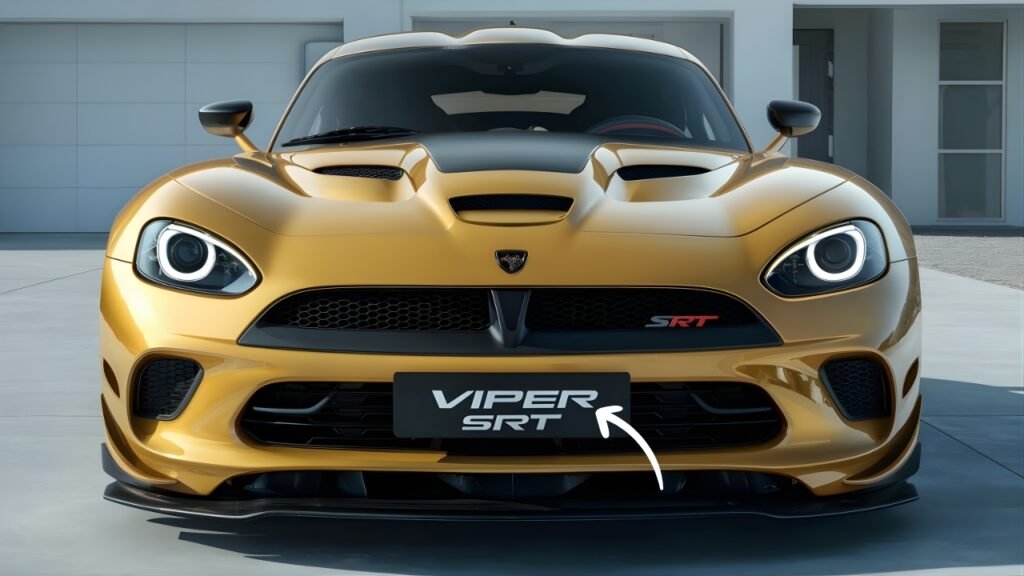
The legendary Dodge Viper name is making headlines again as rumors and early concept previews hint at a dramatic return for the 2026 model year. Known for its raw performance and unmistakable design, the Viper has long been one of America’s most recognizable supercars. Now, nearly a decade after production ended in 2017, the next-generation Viper is expected to bring modern technology and even greater performance while staying true to its aggressive heritage.
For performance enthusiasts, the potential return of the Viper signals a renewed push for pure internal-combustion excitement in an era increasingly dominated by electric vehicles.
Aggressive Exterior Design That Honors Viper Heritage
The 2026 Dodge Viper concept continues the unmistakable styling that made the original model famous while adding modern aerodynamic improvements.
Exterior Highlights
| Feature | Details |
|---|---|
| Body Style | Low-slung American supercar coupe |
| Hood Design | Extra-long sculpted hood with cooling vents |
| Lighting | Slim LED headlights and redesigned tail lamps |
| Materials | Carbon fiber body components for reduced weight |
| Aerodynamics | Large rear diffuser and active airflow elements |
The wide stance and muscular proportions maintain the signature Viper identity while improving airflow and high-speed stability.
Legendary V10 Engine Delivers Extreme Performance
Performance has always defined the Viper, and the rumored powertrain suggests Dodge plans to keep that tradition alive.
Engine and Performance
| Specification | Estimated Details |
|---|---|
| Engine Type | Naturally aspirated V10 |
| Engine Size | 8.4-liter displacement |
| Estimated Power | Around 800 horsepower |
| Transmission | Six-speed manual or dual-clutch automatic |
| Top Speed | Approximately 215 mph |
The naturally aspirated setup would provide instant throttle response and a distinctive exhaust note that has long been associated with the Viper name.
Track-Focused Chassis and Handling Upgrades
The 2026 Viper is expected to include advanced suspension and braking systems designed to deliver both track performance and road stability.
Chassis and Handling Features
| Feature | Benefit |
|---|---|
| Adaptive Suspension | Adjustable ride comfort and track stiffness |
| Carbon-Ceramic Brakes | Improved high-speed stopping power |
| Rear-Wheel Drive Layout | Classic sports car driving dynamics |
| Lightweight Chassis | Increased agility and cornering performance |
These improvements aim to provide sharper handling while preserving the raw driving feel the Viper is known for.
Driver-Centered Interior With Performance Focus
Inside the cabin, the design emphasizes a cockpit-style layout that keeps the driver connected to the road.
Interior Features
| Feature | Details |
|---|---|
| Seating | Sport bucket seats with Alcantara trim |
| Dashboard | Digital performance display |
| Steering Wheel | Flat-bottom racing-style wheel |
| Connectivity | Apple CarPlay and Android Auto support |
| Materials | Carbon fiber and aluminum accents |
While the interior remains performance-oriented, modern connectivity ensures drivers still get essential technology.
Advanced Technology for Modern Performance Cars
Although the Viper focuses on driving excitement, it still incorporates modern performance and safety technology.
Technology Highlights
| Feature | Function |
|---|---|
| Performance Telemetry | Real-time lap data and driving metrics |
| Heads-Up Display | Speed and gear information on windshield |
| Drive Modes | Customizable settings for track, sport, and street |
| Traction Control | Enhanced stability during aggressive driving |
These systems help drivers push the car harder while maintaining control.
Expected Performance Variants
Dodge may offer multiple versions of the Viper aimed at different types of drivers.
Potential Trim Options
| Trim | Focus |
|---|---|
| Viper GTS | Balanced street and track performance |
| Viper ACR | Hardcore track-focused variant |
| Limited Editions | Exclusive models with unique styling |
Track-focused versions could include additional aerodynamic elements and lightweight components for improved lap times.
Why the Viper’s Return Matters
The possible return of the Dodge Viper represents more than just another performance car. It reflects continued demand for high-performance vehicles powered by traditional internal combustion engines.
With rivals like the Corvette ZR1 and high-performance Mustangs dominating headlines, Dodge appears ready to reenter the supercar battle with a vehicle that embraces raw power, aggressive styling, and uncompromising driving engagement.
If the 2026 Dodge Viper reaches production as expected, it could once again become one of the most exciting American performance cars on the road.